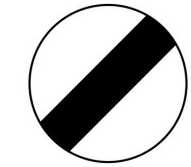
You should know the speed limit for the road on which you're travelling and for your vehicle. The different speed limits are shown in The Highway Code.
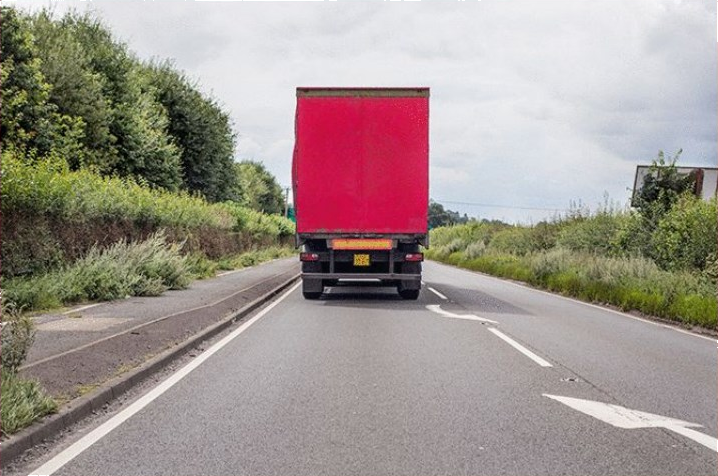
If you’re travelling on a dual carriageway that becomes a single carriageway road, reduce your speed gradually so that you’re not exceeding the limit as you enter. There might not be a sign to remind you of the limit, so make sure you know the speed limits for different types of road and vehicle.
Tap to revealTemporary restrictions on motorways are shown on signs that have flashing amber lights. At the end of the restriction, you'll see this sign without any flashing lights.
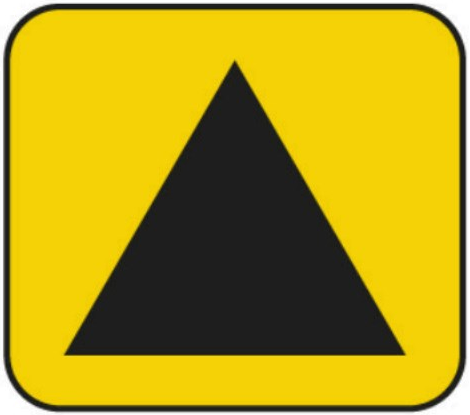
Tap to revealWhen a diversion route has been put in place, drivers are advised to follow a symbol, which may be a black triangle, square, circle or diamond shape on a yellow background.
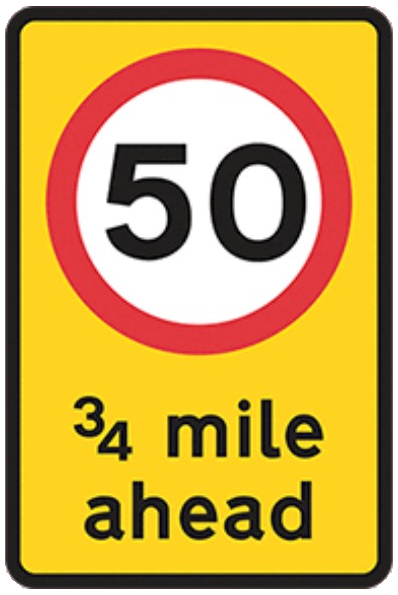
Tap to revealThe sign gives you an early warning of a speed restriction. If you're travelling at a higher speed, slow down in good time. You could come across queuing traffic due to roadworks or a temporary obstruction.
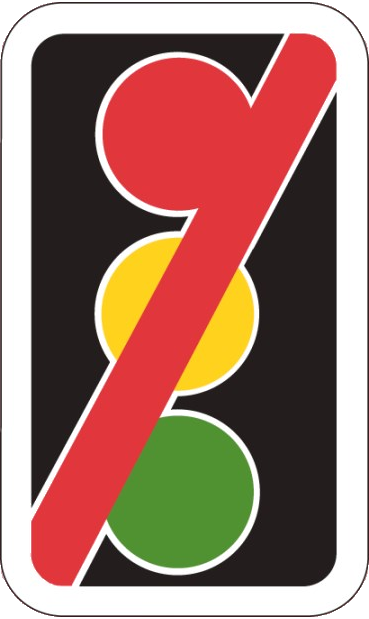
What should you do when you see this sign at a crossroads?Tap to revealWhen traffic lights are out of order, treat the junction as an unmarked crossroads. Be very careful and be prepared to stop; no- one has priority.
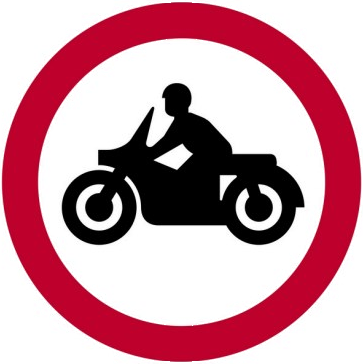
Tap to revealYou must comply with all traffic signs and be especially aware of those signs that apply specifically to the type of vehicle you're using.
You're on a motorway. A lorry has stopped in the right-hand lane. What should you do when you see this sign on the lorry?Tap to revealSometimes work is carried out on the motorway without closing the lanes. When this happens, signs are mounted on the back of lorries to warn other road users of the roadworks ahead.
A red cross above your lane shows that your lane is closed. You should move into another lane as soon as you can do so safely.
Never sound your vehicle's horn aggressively. You must not sound it in a built-up area between 11.30 pm and 7.00 am, or when you're stationary, unless another road user poses a danger. Do not scare animals by sounding your horn.
When your vehicle is stationary, only sound the horn if you think there's a risk of danger from another road user. Do not use it just to attract someone's attention. This causes unnecessary noise and could be misleading.
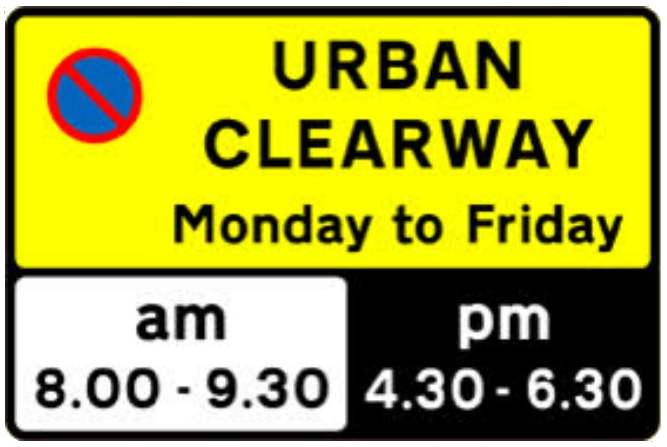
Tap to revealUrban clearways are provided to keep traffic flowing at busy times. You may stop only briefly to set down or pick up passengers. Times of operation will vary from place to place, so always check the signs.
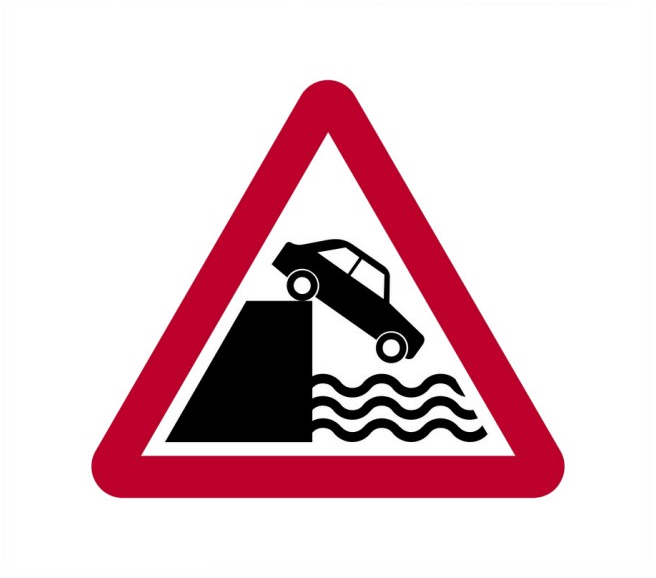
Tap to revealYou should be careful in these locations, as the road surface is likely to be wet and slippery. There may be a steep drop to the water, and there may not be a barrier along the edge of the road.
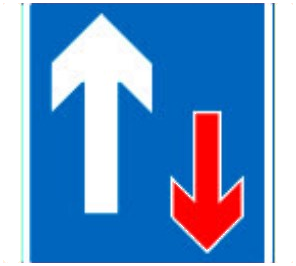
Even though you have priority, be prepared to give way if other drivers do not. This will help to avoid congestion, confrontation or even a collision.
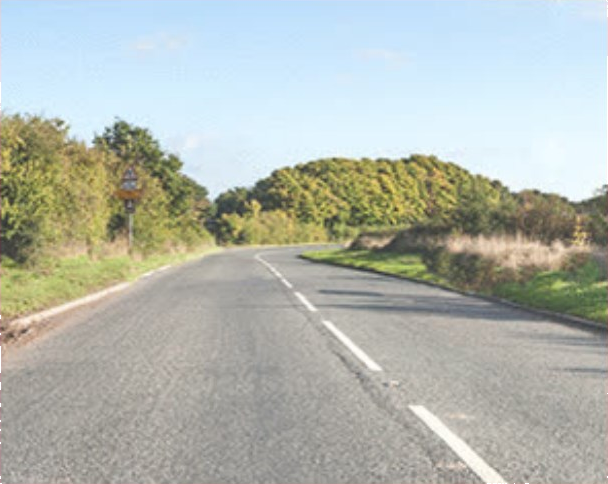
What do the long white lines along the centre of the road mean?Tap to revealThe centre of the road is usually marked by a broken white line, with lines that are shorter than the gaps. When the lines become longer than the gaps, this is a hazard warning line. Look well ahead for these, especially when you're planning to overtake or turn off.
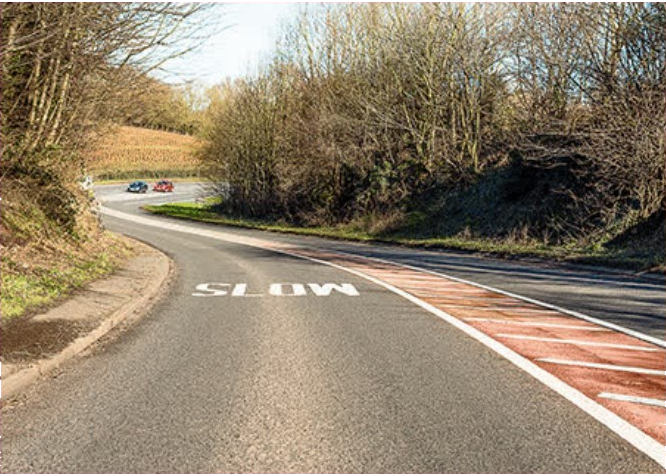
What's the reason for the hatched area along the centre of this road?Tap to revealAreas of 'hatched markings' such as these separate traffic streams that could be a danger to each other. They're often seen on bends or where the road becomes narrow. If the area is bordered by a solid white line, you must not enter it except in an emergency.
If other drivers flash their headlights, this is not a signal to show priority. The flashing of headlights has the same meaning as sounding the horn: it’s a warning of their presence.
As people age, their reactions tend to slow and they can take longer to assess hazards. Don't try to rush them, but be tolerant and patient.
Motorcycles are small vehicles and can be difficult to see. If the rider wears bright clothing, it can make it easier for other road users to see them approaching, especially at junctions.
It's important to reduce direct instruction and transfer the responsibility for learning to the pupil as quickly as possible. You must ensure that the pupil understands what they need to do and how they need to do it. Once they have this knowledge, they should be allowed to practise and develop their competence without constant instruction.
In client-centred learning, there should be lots of opportunities for you to observe how your pupil's learning is going. You should provide frequent feedback on their progress, based on these observations, and talk to your pupil about how they view their progress. Then you can adjust the lesson content to meet your pupil's learning needs.
If a serious incident occurs that requires you to use the dual controls, it's vital that the pupil fully understands what happened and how they could have avoided the situation or dealt with it better.
Taking time to establish a pupil's learning goals and needs provides you with the information you need to make an effective learning plan. It involves the pupil in the planning process, so the final product is something they have agreed to and engaged with.
All-round observation is essential throughout any manoeuvre. Drivers should use their mirrors and pay particular attention to the direction in which they're moving, to vulnerable road users, and to what might be happening in any blind spots.
Learning is far more effective when a pupil can identify for themselves the reason why something has gone wrong. If they can't work it out, you can help them to understand with an explanation or a diagram. When they understand the problem, the pupil should then practise this manoeuvre.
Demonstration, where appropriate, is a valuable tool in the
Learning isn't always a continuous process. Sometimes pupils simply need time to consolidate learning before moving on. On other occasions there may be something blocking progress. You should work with the learner to understand what's happening and agree how to move on.
Most people with hearing difficulties will have developed communications strategies that work for them. For example, they may be able to use a simple system of hand signals. However, if you're unable to work out a way of communicating effectively, you should consider referring the pupil to another driving instructor who has the necessary skills.
Pelican crossings are signal-controlled crossings operated by pedestrians. Push-button controls change the signals.
Pelican crossings have no red-and-amber stage before green; instead, they have a flashing amber light. This means you must give way to pedestrians who are on the crossing but if the crossing is clear you can continue.
If people are waiting to use a pedestrian crossing, slow down and be prepared to stop. Do not wave them across the road, because another driver may not have seen them, may not have seen your signal, and may not be able to stop safely.
‘Tailgating’ is the term used when a driver or rider follows the vehicle in front too closely. It's dangerous because it restricts your view of the road ahead and leaves no safety margin if the vehicle in front needs to slow down or stop suddenly. Tailgating is often the underlying cause of rear-end collisions or multiple pile-ups.
What will happen if you follow this vehicle too closely?Tap to revealStaying back will increase your view of the road ahead. This will help you to see any hazards that might occur and give you more time to react.
Water will reduce your tyres' grip on the road. The safe separation gap of at least two seconds in dry conditions should be doubled, to at least four seconds, in wet weather.
A long lorry with a heavy load will need more time to pass you than a car, especially on an uphill stretch of road. Slow down and allow the lorry to pass.
Emergency vehicles use blue flashing lights. If you see or hear one, move out of its way as soon as it's safe and legal to do so.
Pull over in a place where the ambulance can pass safely. Check that there are no bollards or obstructions in the road that will prevent it from passing.
A green flashing beacon on a vehicle means the driver or passenger is a doctor on an emergency call. Give way to them if it's safe to do so. Be aware that the vehicle may be travelling quickly or may stop in a hurry.
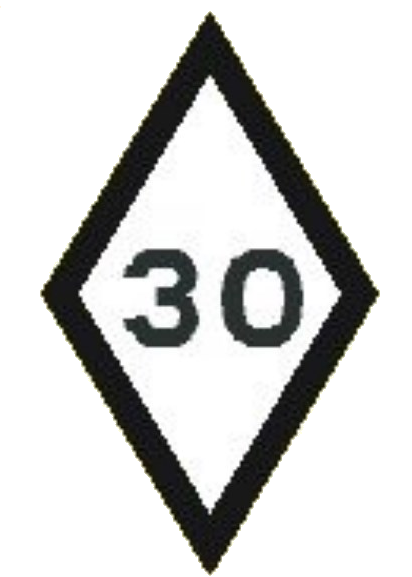
Who should obey diamond-shaped traffic signs?Tap to revealThese signs apply only to tram drivers, but you should know their meaning so that you're aware of the priorities and are able to anticipate the actions of the driver.