October 25, 2025

free adi part 1 Band 4 theory test practice Quiz

Screenshot 88


0%
5 votes, 4.8 avg

Free ADI Band 4 Theory Test

Band 4: Publications and Instructional Techniques

  • Covers: Effective teaching methods, communication skills, and safety messaging.
  • Why it matters: You must explain techniques clearly to a wide range of learners.
  • Tips: Practice lesson planning and think about how to tailor your teaching to different learning styles.

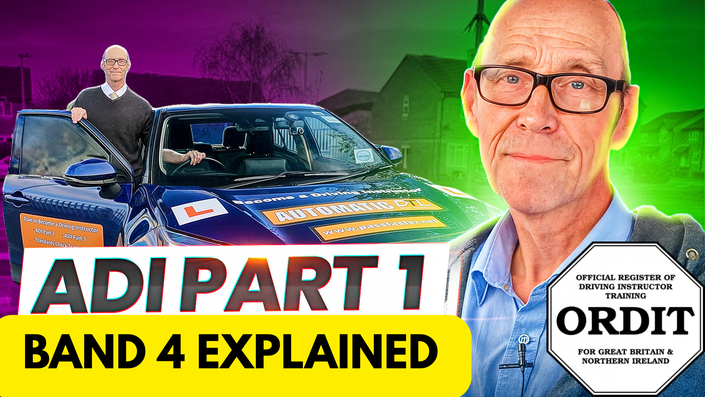
If you want to see the questions in this band explained by an ORDIT registered driving instructor trainer - so you understand them better go to www.adionline.co.uk/band4

Explanation

Advise a pupil that they should never overtake on the approach to a junction. The driver they're following may decide to turn right at the last moment. Other vehicles may arrive quickly at the junction and turn left into your road without taking effective observation.

1 / 15

You’re teaching a learner driver who’s following a slower-moving vehicle. You can see a junction ahead on the right. What should you tell your pupil?

(mark one answer)

Explanation

Officially, the flashing of headlights has the same meaning as sounding the horn - a warning of the presence of a vehicle. However, drivers sometimes flash their headlights for other reasons. Make sure you know what's meant by the signal before acting on it.

2 / 15

What does it mean when another driver flashes their headlights?

(mark one answer)

Explanation

At junctions where the view is restricted, you need to make sure your pupil has time to assess the situation. Teach them to approach slowly and get a good look at the traffic situation before making a decision.

3 / 15

Your pupil is approaching a junction where the view is restricted. What should you tell them to do?

(mark one answer)

Explanation

At the correct stage in a pupil's development, it's beneficial to practise steering the vehicle with one hand. They should then find it easier to change gear, operate another control or give arm signals as and when appropriate. Any tendency to drive with one hand without good reason should be strongly discouraged.

4 / 15

A novice driver is able to steer a straight course. How could you help them improve their steering skills?

(mark one answer)

Explanation

You may need to check your pupil's understanding by asking questions. If they offer a partially correct answer, you should confirm the correct parts and, to complete their understanding, give them feedback on where they went wrong.

5 / 15

What should you do when a pupil gives a partially correct answer to a question?

(mark one answer)

Explanation

The safest rule is never to drink and drive. Alcohol seriously affects judgement and concentration. It will reduce driving ability, give a false sense of confidence and slow down reactions.

6 / 15

What effect does alcohol have on your driving?

(mark one answer)

Explanation

If you're taking medication that's likely to affect your driving, don't drive. You mustn't put other road users, your passengers or yourself at risk.

7 / 15

You’re about to return home from holiday when you become ill. What should you do if a doctor prescribes drugs that are likely to affect your driving?

(mark one answer)

Explanation

Insurance companies are likely to charge a higher premium for people who have been convicted of driving while unfit through drink or drugs. This is because they've shown that they're a risk to others on the road.

8 / 15

Which expense is likely to increase as a result of being convicted of driving while unfit through drink or drugs?

(mark one answer)

Explanation

Some people find learning to drive easy, while others struggle with the challenge. It's important that lessons are matched to the pupil's ability. Mismatching lessons and ability can lead to loss of confidence, disinterest and dissatisfaction.

9 / 15

How should driving lessons be planned?

(mark one answer)

Explanation

When planning and delivering a lesson, it's important to remember that we all learn in different ways. Continuing to deliver in the same way, when the pupil is clearly not engaging or making progress, may reduce their motivation even further.

10 / 15

What’s the best way to maintain the motivation and interest of a pupil having difficulty in learning?

(mark one answer)

Explanation

When stopping a car, a gear change is often not needed. Modern cars have powerful brakes and tyres with good grip. This makes it generally unnecessary to select a lower gear before stopping.

11 / 15

You’re teaching a pupil to stop. What should you teach them about using the gears to help slow the car?

(mark one answer)

Explanation

If your usual techniques or methods don't appear to be working, you should discuss the matter with your pupil, and explore alternative ways of getting the point across.

12 / 15

What should you do if a pupil you’re instructing fails to make the progress you were expecting?

(mark one answer)

Explanation

Learning is far more effective when a pupil can identify for themselves the reason why something has gone wrong. If they can't work it out, you can help them to understand with an explanation or a diagram. When they understand the problem, the pupil should then practise this manoeuvre.

13 / 15

What should you do if a pupil drives the rear wheels over the kerb when they turn left?

(mark one answer)

Explanation

All-round observation is essential throughout any manoeuvre. Drivers should use their mirrors and pay particular attention to the direction in which they're moving, to vulnerable road users, and to what might be happening in any blind spots.

14 / 15

What should you teach your pupils to do when they’re learning to turn their vehicle around in the road?

(mark one answer)

Explanation

It's important to reduce direct instruction and transfer the responsibility for learning to the pupil as quickly as possible. You must ensure that the pupil understands what they need to do and how they need to do it. Once they have this knowledge, they should be allowed to practise and develop their competence without constant instruction.

15 / 15

How much verbal instruction is needed to help a pupil attain a good standard of driving?

(mark one answer)

Your score is

The average score is 91%

0%

Please Give Your Rating

Comments are closed.

We provide a reputable and professional service that aims to give you the confidence to pass your test and drive safely on the roads.

Useful Links

07791152046