October 25, 2025

free adi part 1 Band 4 theory test practice Quiz

adi band 4 questions and answers


0%
9 votes, 4.9 avg

Free ADI Band 4 Theory Test

Band 4: Publications and Instructional Techniques

  • Covers: Effective teaching methods, communication skills, and safety messaging.
  • Why it matters: You must explain techniques clearly to a wide range of learners.
  • Tips: Practice lesson planning and think about how to tailor your teaching to different learning styles.

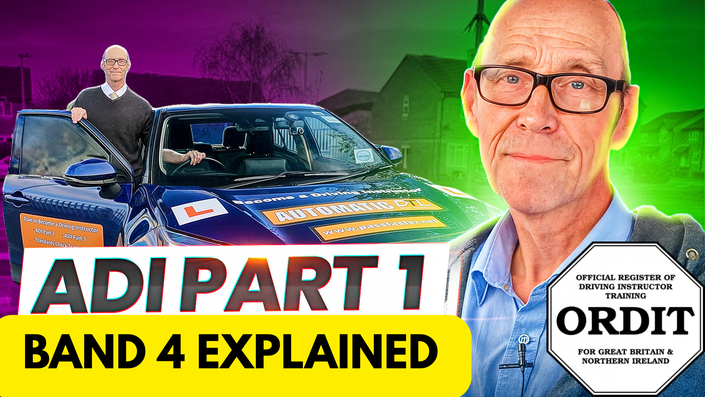
If you want to see the questions in this band explained by an ORDIT registered driving instructor trainer - so you understand them better go to www.adionline.co.uk/band4

Explanation

If a pupil is to make effective progress, they must have an accurate idea of how well they're doing. It would be dangerous if they moved on to a more complex driving task before mastering all the competencies required to perform that task successfully. Ideally, the process should start with you encouraging the pupil to identify their own weaknesses.

1 / 15

Why should you provide feedback to your pupil?

(mark one answer)

Explanation

When booking a driving-test appointment, it's important to declare if the candidate is deaf. This will ensure that appropriate arrangements are made for the test.

2 / 15

What should a deaf pupil be advised to do when they’re ready to apply for their driving test?

(mark one answer)

Explanation

When teaching your pupil the turn-in-the-road exercise, you should explain that having the car under control is only part of the procedure. They also need to be aware of other road users and know how to deal with them safely.

3 / 15

What should you tell your pupil while you’re teaching the turn-in-the-road exercise?

(mark one answer)

Explanation

If a pupil isn't responding to a particular part of the learning programme, with a bit of help they'll normally be able to say what's going wrong. In saying what's wrong, they'll often be able to tell you what it will take to get over the problem.

4 / 15

What should you do if your pupil fails to respond to something you’re teaching?

(mark one answer)

Explanation

At junctions where the view is restricted, you need to make sure your pupil has time to assess the situation. Teach them to approach slowly and get a good look at the traffic situation before making a decision.

5 / 15

Your pupil is approaching a junction where the view is restricted. What should you tell them to do?

(mark one answer)

Explanation

Learning targets should be realistic and attainable; reaching a learning target will reinforce a pupil's progress. Setting objectives that are too ambitious or too complex is more likely to demotivate pupils.

6 / 15

What’s the most likely outcome of using attainable learning targets for a pupil under instruction?

(mark one answer)

Explanation

You may need to check your pupil's understanding by asking questions. If they offer a partially correct answer, you should confirm the correct parts and, to complete their understanding, give them feedback on where they went wrong.

7 / 15

What should you do when a pupil gives a partially correct answer to a question?

(mark one answer)

Explanation

If you're driving at night or in poor visibility, tinted lenses will make everything appear darker. This will make it more difficult for you to see in what are already difficult conditions.

8 / 15

Which type of glasses shouldn’t be worn when driving at night?

(mark one answer)

Explanation

Insurance companies are likely to charge a higher premium for people who have been convicted of driving while unfit through drink or drugs. This is because they've shown that they're a risk to others on the road.

9 / 15

Which expense is likely to increase as a result of being convicted of driving while unfit through drink or drugs?

(mark one answer)

Explanation

If you're involved in a collision, a correctly adjusted head restraint will reduce the risk of neck and back injury. It may not be effective if it's not properly adjusted.

10 / 15

What will reduce the risk of whiplash injury?

(mark one answer)

Explanation

Some people find learning to drive easy, while others struggle with the challenge. It's important that lessons are matched to the pupil's ability. Mismatching lessons and ability can lead to loss of confidence, disinterest and dissatisfaction.

11 / 15

How should driving lessons be planned?

(mark one answer)

Explanation

When stopping a car, a gear change is often not needed. Modern cars have powerful brakes and tyres with good grip. This makes it generally unnecessary to select a lower gear before stopping.

12 / 15

You’re teaching a pupil to stop. What should you teach them about using the gears to help slow the car?

(mark one answer)

Explanation

Learning isn't always a continuous upward process. Sometimes pupils simply need time to consolidate learning before moving on. On other occasions there may be something blocking progress. You should work with the learner to understand what's happening and decide how to proceed.

13 / 15

What should you do if a pupil seems to have reached a point where they’ve stopped making progress in their learning?

(mark one answer)

Explanation

Detailed instruction should decrease as the pupil's ability increases. An instructor shouldn't be controlling the pupil all of the time. This takes the initiative away from the pupil and could be considered over-instruction.

14 / 15

Your pupil’s knowledge and driving competence improve. What’s likely to happen to the level of instructor involvement?

(mark one answer)

Explanation

As people age, their reactions tend to slow and they can take longer to assess hazards. Don't try to rush them, but be tolerant and patient.

15 / 15

Typically, how does ageing affect people’s driving ability?

(mark one answer)

Your score is

The average score is 84%

0%

Please Give Your Rating


ADI Part 1 Theory Test Training - BAND 4 Explained

ADI Part 1 Theory Test Training - BAND 4 Explained

Why Is ADI Part 1 (and Especially Band 4) So Hard? If you’ve started preparing for the ADI Part 1 theory test, you’ve likely already discovered what so many trainee instructors realise far too late: This test is no joke. And Band 4? That’s where most people feel like they’ve hit a wall. But why is it so hard? You’re not being dramatic—it really is a tough exam Have all the questions in Band 4 of the ADI Part 1 Theory Test explained by an ORDIT registered trainer, so you can be more confident of passing the test and understanding more about what is expected for the ADI Part 3 phase of your training. 6 months access £6.95

£9.95

Comments are closed.

We provide a reputable and professional service that aims to give you the confidence to pass your test and drive safely on the roads.

Useful Links

07791152046